
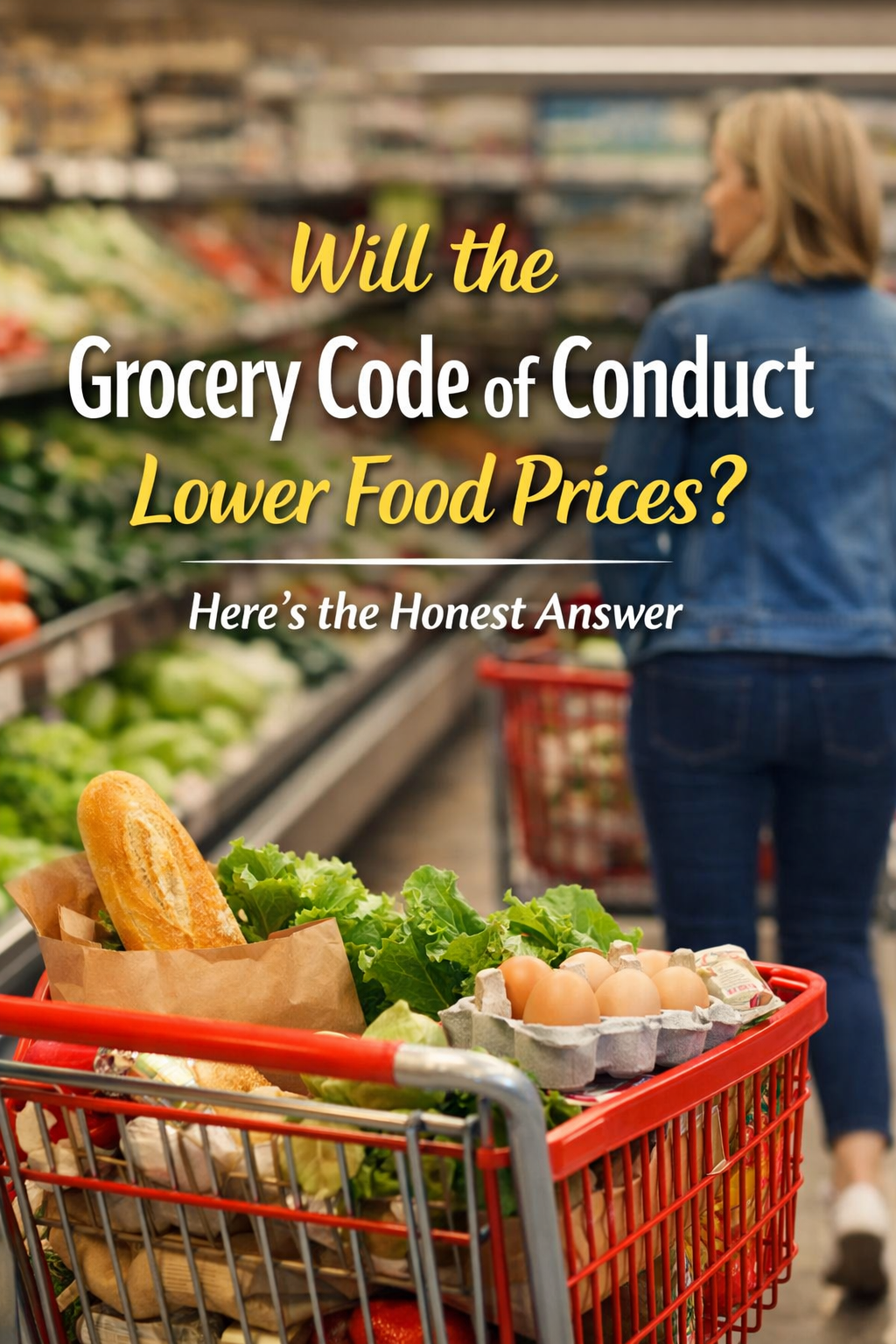
If you’ve been paying attention to the news or your grocery receipts, you may have heard about Canada’s new Grocery Code of Conduct and wondered:
Will this actually lower food prices? Or is it just another policy that sounds good on paper and won’t really matter to Canadians
Let’s talk honestly without false promises or politics.
What Is the Grocery Code of Conduct?
The Grocery Code of Conduct is a new, voluntary agreement designed to make relationships between grocery retailers and food suppliers fairer and more transparent. Please note the word voluntary.
In simple terms, it aims to stop large grocery chains from:
- Making last-minute contract changes
- Charging surprise fees
- Passing unexpected costs down the supply chain
Why does this matter? Because when suppliers are squeezed, those costs usually end up being passed on to us at the checkout. This is why Canadians have seen, on average, a 20% plus increase in their grocery bills over the last few years.
The Big Question: Will It Lower Grocery Prices?
The honest answer: No, and not by much if at all. Reality is expect price increases in 2026.
This code is not a magic wand that will suddenly make groceries affordable again. You likely won’t see prices drop overnight. In fact plan for prices to increase by about 5% this year. Why do I write that? My 9- 5 job has me as a small part of the food chain. I work for a food broker.
But—and this is important—it can help prevent prices from rising even faster in the future if companies actually get on board.
How the Code Could Help Over Time
1. Fewer surprise costs = more stable pricing
When suppliers know what to expect, they don’t need to build extra “just in case” costs into their pricing. Stability behind the scenes can mean less pressure to raise prices later. This means you may see one price jump instead of two or three.
2. Stronger support for Canadian farmers and producers
Small and mid-size suppliers have often been hit the hardest by unfair practices. When they’re protected:
- Local food options are more likely to survive
- Competition stays healthier
- Canadians benefit from more choice not just higher prices
3. More transparency in the food system
This code encourages clearer contracts and fair dispute resolution. Transparency matters because a system built on fairness is less likely to exploit consumers when times get tough.
What the Grocery Code of Conduct Will Not Do
Let’s be clear so expectations stay realistic:
❌ It won’t roll back years of inflation
❌ It won’t control global food costs or global food shortages like the current one on chocolate.
❌ It won’t override corporate profit motives, and if you look at their fiscal reports, all the major Canadian food retailers are currently profiting $3.50 out of every $100 sold.
❌ It won’t instantly make groceries “cheap” again
This is simply our reality today.
Why This Still Matters for Canadian Families
Even if prices don’t drop, this code:
- Addresses root causes, not just symptoms, which is a good thing.
- Pushes the industry toward accountability, and we hope companies step up and volunteer.
- Signals that Canadians are demanding fairness
Food is not a luxury; it’s a basic need. And when families are already choosing between groceries, rent, and gas, every single safeguard matters.
A Values Perspective (Why I Care About This and You Should too)
For me, this conversation isn’t just about economics, our grocery bills.—It’s about stewardship, fairness, and peace of mind.
Living intentionally doesn’t mean ignoring reality. It means:
- Making wise choices, plan for increases this year.
- Advocating for systems that protect the vulnerable, smaller suppliers
- Letting go of fear while staying informed
As Philippians 4:6–7 reminds us, we are called to bring our concerns—not ignore them—and seek peace, even in uncertain times.
So…Should Canadians Care?
Yes. Absolutely.
Not because this code will fix everything—but because it’s a step in the right direction. There are many other steps that need to be taken but it is a move that could help many.
Progress is often quiet. It rarely feels dramatic. But it matters.
What You Can Do Right Now
- Stay informed without doom-scrolling
- Continue shopping intentionally where possible
- Support local producers when you can, and visit those local farmers’ markets.
- Advocate for transparency and fairness
And most importantly: don’t carry the weight of this alone. Systems change slowly—but your daily choices still matter. Where you shop matters; how you shop matters.
Final Thoughts
Will the Grocery Code of Conduct lower food prices?
Probably not right away.
But it can help build a fairer, more stable food system—one that works better for Canadians over time.
And in a season where so many of us are trying to live with intention, peace, and purpose…that’s worth paying attention to.
Leave a Reply